
Texas Surgical Technologists earn a median annual wage of $65,220 per BLS (Bureau of Labor Statistics) Occupational Employment and Wage Statistics (OEWS) data, with the top 10% earning over $92,580.
"Texas needs to add roughly 2,100 to 2,700 healthcare workers monthly to keep up with population growth. When there aren't enough people to provide care, patients wait longer, travel further and too often go without."
– John Hawkins, President and CEO of the Texas Hospital Association
Surgical Technicians are named explicitly in the shortage list. The employer association's own chief executive is sounding the alarm, which makes this a market you do not have to talk yourself into.
What Texas Surgical Tech Employers Screen For Before an Interview
Every job posting in Dallas or Houston asks for roughly the same things. Certification lands first. The accepted credentials in Texas are the Certified Surgical Technologist (CST) from the National Board of Surgical Technology and Surgical Assisting (NBSTSA), the Tech in Surgery – Certified (TS-C) from the National Center for Competency Testing (NCCT), or the Nationally Registered Surgical Technologist (NRST) from American Allied Health (AAH) – the credential Health Tech Academy graduates earn. All three are recognized across Texas hospital systems and ambulatory surgery centers (ASCs).
After certification, hiring managers focus on three things in close succession:
- Sterile field competency.
- Instrument knowledge by case type.
- Basic Life Support (BLS) certification.
Candidates who have everything else in order but let their BLS lapse routinely sit in application limbo while that paperwork resolves. The lesser-known screen is case familiarity. Postings across Houston and Dallas-Fort Worth most commonly list general surgery, orthopedics, and cardiovascular as the expected case mix for new graduates. Candidates who can speak specifically to instrument handling in these categories move faster through screening.
Start Your Surgical Tech Career Today
Health Tech Academy's 16-week online Surgical Tech Certification Program prepares candidates specifically for the NRST through the AAH and covers sterile technique, surgical instrumentation, and case counts.
See Our Full Program →A Word From One of Our Surgical Tech Students
Meet Your Surgical Tech Instructor
The Surgical Tech Skills That Determine Who Gets the Offer
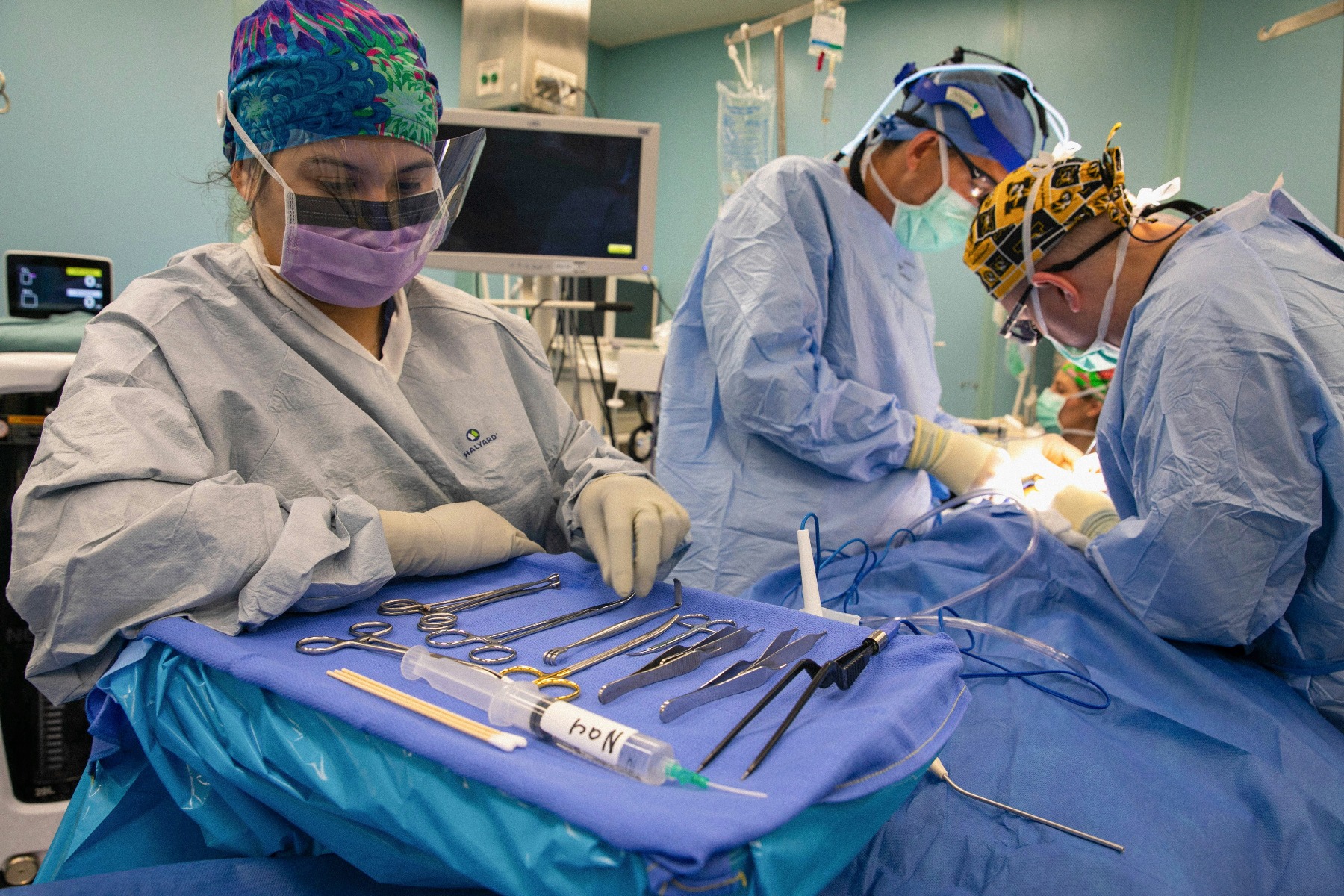
Two candidates with identical credentials will not receive identical offers. The gap is almost always in how well someone functions inside the operating room (OR) as a team member rather than an individual performer.
"Being a part of a surgical team is poetic to me. Being able to critically think, anticipate, and stay organized are the top assets that I bring to the field."
– Brian Kriever, a Surgical Technologist at Southeast Community College
Anticipation is the operative word. Techs who pass instruments before a surgeon reaches for them, who track sponge counts unprompted, who catch a suture running low before anyone calls for it – those are the candidates who get callbacks. Texas hospital systems in Houston and Dallas run high case volumes. Efficiency-focused ORs have no patience for techs who need frequent redirection. This is not something that gets covered in most orientation sessions; it develops through deliberate observation during clinical training, watching patterns rather than waiting for instruction.
Test Your OR Readiness
Before you apply anywhere, check where you stand on OR fundamentals. Take our free practice exam and get a realistic sense of your readiness.
Take Our Free Practice Exam →How to Get Hired Fast as a Surgical Technologist: Steps That Work

- Start with ambulatory surgery centers before flagship hospitals. Major systems like Houston Methodist, Texas Children's, and UT Southwestern in Dallas typically require one year of experience for full-time OR positions. ASCs hire new graduates more readily and provide consistent case exposure without hospital on-call obligations. Six to twelve months of ASC experience unlocks hospital doors considerably faster.
- List case counts in your resume, not generic duties. "Assisted during orthopedic procedures" tells a hiring manager nothing distinctive. "Participated in 120+ general surgery and orthopedic cases during clinical training" signals that you count cases the way a credentialed tech should. Every posting in Texas is reviewed against dozens of others.
- Consider San Antonio and the Rio Grande Valley if you are open to relocation. San Antonio's military medical infrastructure and the Valley's growth corridor regularly post surgical tech openings with signing bonuses. AMN Healthcare data shows travel contracts in Harlingen averaging $1,679 per week. Entry-level candidates who spend a year in these markets often negotiate back into their preferred Texas city at a significantly stronger starting rate.
- Ask about structured OR orientations in the interview. Texas Health Resources and several other systems advertise structured scrub tech orientation programs specifically for new graduates. This is worth asking about directly: "What does your OR orientation look like for new grads?" Facilities that expect immediate independent function on day one are harder starting environments than facilities with a defined ramp-up period.
- Target informational interviews before formal applications. A 15-minute call with a working Surgical Tech at a facility you want to work at can reveal which units are hiring, what the case mix looks like, and whether a particular manager is known for mentoring new grads. The OR community in Texas, particularly in Houston and Dallas, is smaller than the cities suggest.
Watch Our Video on How You Advance Your Career as a Surgical Technologist
Where the Surgical Tech Jobs Are Right Now

Surgical technologist employment in Texas totalled10,160 workers statewide as of May 2025. The concentration is predictably in Houston and Dallas-Fort Worth. In the Houston metro area, BLS data shows an annual mean wage of $63,290 for Surgical Technologists, with 2,280 employed across the metro. Dallas currently has over 230 active Surgical Tech positions on Glassdoor, with employers ranging from UT Southwestern to multispecialty outpatient surgical networks. Indeed lists over 1,300 active Surgical Tech openings across Texas as of mid-2026.
Austin, Round Rock, and Fort Worth have smaller individual job counts but substantially less applicant competition. Signing bonuses appear more frequently in these markets than in Houston or Dallas simply because the hiring pressure is less visible and employers are more motivated to attract candidates.
Travel contracts are a separate track worth noting. AMN Healthcare places Texas OR Surgical Techs at weekly rates ranging from $1,420 to over $2,497 depending on specialty and case demands. For candidates who want to build case diversity rapidly – which accelerates salary growth over a two-to-three-year window – 13-week travel contracts in Texas are worth serious consideration before settling into a permanent role.
Get Certified, and You’ll Get Hired
Texas requires certification to practice surgical technology, which means everyone competing for the same openings carries a credential. The differentiators are case familiarity, sterile field confidence, and whether you can function as someone a surgical team relies on rather than directs. The market is favorable – 10,000+ employed techs, documented shortages, and a state that adds 2,100 to 2,700 healthcare workers monthly. That is a labor market that rewards preparation.
Start with ASCs, get BLS current before submitting anything, and build a resume around case counts rather than job duties. The candidates who land roles in four to six weeks finished the preparation before starting the search.
Frequently Asked Questions and Answers
Do Surgical Technologists Need to Be Certified in Texas?
Yes. Texas is one of 18 states with a legal certification requirement for Surgical Technologists. The state accepts the CST from the NBSTSA, the TS-C from the NCCT, and the NRST from the AAH. Uncertified individuals cannot legally work as Surgical Technologists in Texas regardless of experience.
What is the Average Salary for Surgical Technologists in Texas?
The BLS reported a median annual wage of $65,220 for Surgical Technologists in Texas as of May 2025, with the top 10% earning over $92,580. Pay varies by metro area, specialty, and whether the role includes hospital shift differentials, call coverage, or travel contracts.
How Many Surgical Tech Jobs Are Open in Texas Right Now?
Indeed lists over 1,300 active Surgical Tech openings across Texas as of mid-2026. Dallas-Fort Worth and Houston carry the highest concentration, though Austin, San Antonio, and Fort Worth offer less competitive application pools with comparable pay.
Is Texas a Good State to Start a Surgical Tech Career?
Yes, for specific reasons. The legal certification requirement limits competition from uncertified applicants. Texas employs over 10,000 Surgical Technologists. Major hospital systems and a growing ASC sector are actively recruiting. The documented statewide healthcare workforce shortage means facilities are motivated to hire and develop new graduates.
How Long Does it Take to Get Hired as a New Surgical Tech in Texas?
New graduates who hold current certification, maintain a valid BLS card, and target ASCs before large hospital systems typically land roles within four to eight weeks of active applications. Candidates who apply directly to major hospital systems first often face longer timelines because of experience requirements those facilities impose for OR positions.
Do I Need an Associate Degree or a Certificate to Get a Surgical Tech Job in Texas?
Texas employers require an accredited program completion – like Health Tech Academy’s – and national certification – a certificate program plus the relevant exam satisfies this. An associate degree is not legally required, though some employers may prefer it for senior or lead tech positions. Entry-level hiring focuses on certification status and OR readiness, not degree level.