
Last updated: October 2026
What is a certified surgical technologist?
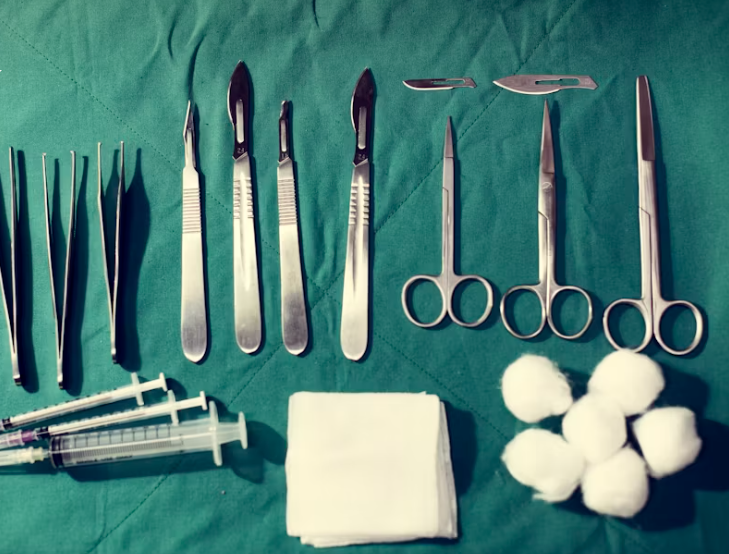
A surgical technologist (also called a surgical tech, scrub tech or operating room technician) prepares the operating room, sets up and maintains the sterile field, and passes instruments to the surgeon during procedures. "Certified" means they have passed a national exam from a certifying body. People also search for "certified surgical technician": it is the same job and the same credentials.
Strictly, "Certified Surgical Technologist" is the NBSTSA's credential: the National Board of Surgical Technology and Surgical Assisting says only a surgical technologist certified by the NBSTSA can be called a CST. Its certification program is accredited by the National Commission for Certifying Agencies (NCCA).
CST vs TS-C vs NRST: how the surgical tech certifications compare
| CST | TS-C | NRST | |
|---|---|---|---|
| Certifying body | NBSTSA | NCCT | American Allied Health (AAH) |
| Who can sit the exam | Graduates of CAAHEP- or ABHES-accredited programs; military program graduates | Students or graduates of NCCT-authorized programs; or 3 years (6,240 hours) full-time experience in the last 5 years; military route | Graduates of an eligible training program |
| Surgical cases | 120 in an accredited program (NBSTSA cites 300–400 hours of OR experience) | 125 documented, 90 as first scrub | No case minimum; no externship required |
| Exam | 175 questions (150 scored), 4 hours, pass = 98 correct | 175 questions (150 scored, 25 pretest); scaled score of 70 | Online, 150 multiple-choice questions, 2 hours |
| Exam fee | $230 AST member / $340 non-member (2025) | See NCCT's current fee (one voucher is included in HTA's Professional program) | One voucher is included in HTA's Surgical Technologist program |
| Renewal | Continuing education each certification cycle, or re-exam | 14 CE hours a year; $89 a year | Every year: about 5 CE credits and a fee |
| Recognition | Most widely recognized; named in several state laws | Accepted by many employers; named in Texas law alongside the CST | Newer and less widely known; employer and state acceptance varies |
The CST (Certified Surgical Technologist) from the NBSTSA
Who can take the CST exam?
To sit for the CST exam you must graduate from a CAAHEP- or ABHES-accredited surgical technology program or from a military surgical technology program. Those programs include supervised clinical rotations: at least 120 surgical cases on real patients, which the NBSTSA describes as 300 to 400 hours of operating room experience. See externship and case requirements.
“A typical program consists of lab or mock operating room training and surgical rotations. Coursework includes anatomy and physiology, along with hands-on practice in scrubbing and surgical instrumentation.”
– Kevin Frey, Director of Education at the Association of Surgical Technologists
What is on the CST exam?
The CST is a computer-based exam with 175 multiple-choice questions, 150 of them scored, and you have four hours. You pass by answering 98 of the 150 scored questions correctly. The content splits into three areas:
| Area | Share | Scored items |
|---|---|---|
| Perioperative care (preoperative, intraoperative and postoperative) | 65% | 97 |
| Ancillary duties (administrative and personnel; equipment sterilization and maintenance) | 15% | 23 |
| Basic science (anatomy and physiology, microbiology, surgical pharmacology) | 20% | 30 |
How much does the CST exam cost?
The NBSTSA's 2025 application lists $230 for AST members and $340 for non-members. If you don't pass, you can reapply right away, up to three exams in a calendar year (NBSTSA application).
Why is the CST the best-known credential?
The NBSTSA says the CST is preferred or required by most employers and required by many states, and it is the only surgical tech credential endorsed by groups such as the American College of Surgeons, the Association of Surgical Technologists and the American Society of Anesthesiologists. It is also the credential named in several state laws (see below).
The TS-C (Tech in Surgery – Certified) from the NCCT
The NCCT's TS-C offers more ways in than the CST. You can qualify as a student or recent graduate of an NCCT-authorized program, with three years (6,240 hours) of full-time surgical tech work in the last five years, or through military training. You must also document at least 125 surgical cases, 90 as first scrub.
The exam has 175 questions, 150 of them scored and 25 unscored pretest items (NCCT test plan summary), and you need a scaled score of 70 (NCCT). For the full exam breakdown, see our TS-C exam guide. To keep the credential you complete 14 hours of continuing education each year and pay an $89 annual fee (NCCT recertification).
The NRST (Nationally Registered Surgical Technologist) from American Allied Health
The NRST is a national surgical technologist certification from American Allied Health (AAH). The exam is taken online: 150 multiple-choice questions in 2 hours (My Next Move). It does not require an externship for graduates of an eligible training program, which is why online programs often prepare students for it. You renew it every year through AAH with about 5 continuing education credits and a fee.
The exam fee includes one free retake and practice tests (My Next Move).
It is newer and less widely known than the CST or TS-C. Employer and state acceptance varies, so check with the employers and the state where you plan to work before you choose it.
NRST Exam Voucher Included
Health Tech Academy's 16-week, self-paced online Surgical Technologist program (260 hours) includes one NRST exam voucher in your tuition, so there are no surprise costs at the finish line.
Explore the Program →Meet Health Tech Academy's Surgical Technologist Instructor
Which surgical tech certification should you choose?
| If this is you… | Aim for | Why |
|---|---|---|
| You can attend a CAAHEP- or ABHES-accredited program | CST | Widest recognition; the credential most hospitals and state laws name |
| You already work as a surgical tech (3+ years) without an accredited diploma | TS-C | The experience route lets you certify without going back to school |
| You study in an NCCT-authorized program, or plan to work in Texas | TS-C or CST | Texas accepts either at licensed facilities |
| You want an online route and your employer and state accept it | NRST | No externship requirement; check acceptance first |
| You're not sure which your state needs | Check first | See the state section below, then ask two or three local employers which credential they hire |
Can you take the CST exam without going to an accredited school?
No. The NBSTSA only accepts graduates of CAAHEP- or ABHES-accredited programs and graduates of military surgical technology programs. If you trained elsewhere, the TS-C (through an NCCT-authorized program or three years of experience) and the NRST are the national alternatives. You can check a program's status in the CAAHEP program finder.
Do surgical techs need a license? State requirements
Most states do not issue a surgical tech license, but a growing number require certification to be hired, or registration with the state. Rules change, so check your state board and the AST's map of state laws (AST members). Some examples:
| State | What the law requires | Source |
|---|---|---|
| Texas | Techs at licensed hospitals and surgery centers must complete an accredited program and hold the CST or TS-C, with some exceptions | Health & Safety Code §259.002 (see Texas guide) |
| Virginia | Surgical technologists are certified by the Board of Medicine; most must keep a national credential current at renewal | 18VAC85-160-65 |
| Illinois | Registration as a surgical technologist; requirements reference the NBSTSA certification exam | 225 ILCS 130 |
Rules differ from state to state, and in states without a law most hospitals still prefer certified candidates.
Can you work as a surgical tech without certification?
In some states, yes, but it is getting harder. Where the law does not require it, the decision belongs to the employer, and most hospitals prefer or require certification. Some state laws give new graduates a short window to pass the exam after they are hired. If you plan to work without certification at first, ask employers in your area before you choose a program.
Can you get a surgical tech certification online?
You can complete the coursework online, but not the CST route: it requires graduation from an accredited program with in-person clinical rotations. Online programs usually prepare students for the NRST or, with a clinical externship, the TS-C. See whether 6-week and online programs are legit.
Start Your Surgical Tech Training Online
Health Tech Academy's Surgical Technologist program prepares you for the NRST with self-paced online coursework (16 weeks, 260 hours), one exam voucher and five 1-on-1 coaching sessions.
Start Your Enrollment →Hear from One of Our Students
The certification exam: what you're facing
Exam content breakdown
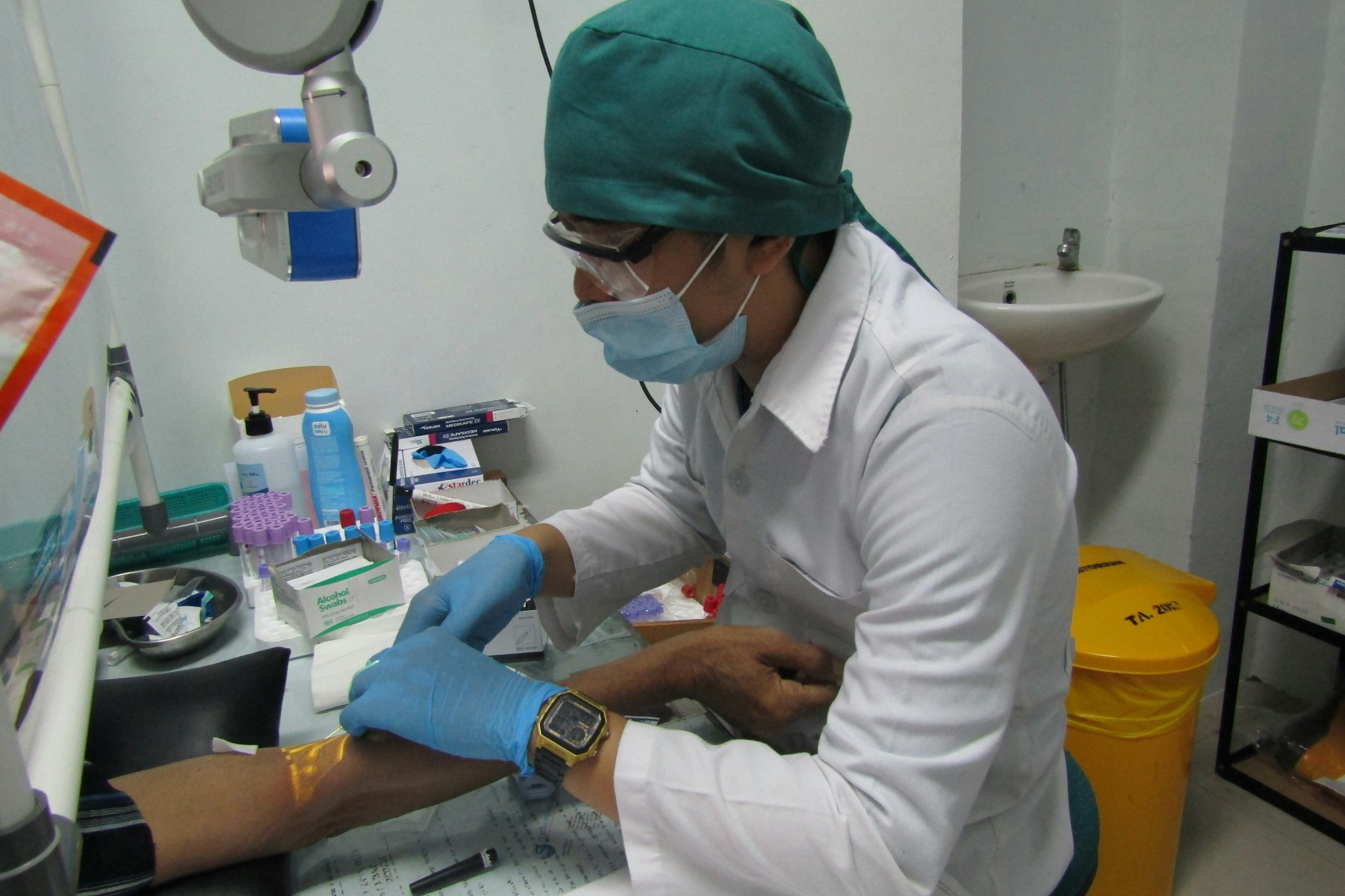
The CST exam covers perioperative care (the most heavily weighted area), ancillary duties such as specimen handling and sterilization, and basic science, including anatomy, physiology and microbiology. Candidates who pass tend to understand the processes rather than memorize isolated facts. For format, timing and a study plan, see surgical tech certification exams.
Preparation resources that work
- Spaced repetition rather than cramming.
- Focus on processes (case flow, sterile technique) rather than isolated facts.
- Realistic, timed practice exams.
- A study group.
- Hands-on clinical experience.
A practical benchmark: take a full baseline practice exam in your first week, practice under four-hour timed conditions, and aim for 80% or more on three consecutive full-length practice exams before you schedule.
Gauge Your Readiness
Take our free practice exam to see where your knowledge stands before you choose a certification route.
Take Our Free Practice Exam →Lesser-known certification facts
The military training route
Military surgical technician training can make you eligible for the CST exam without attending a civilian program. The NBSTSA lists military program graduates as an eligibility category.
State-specific registration requirements
Some states, such as Illinois, require registration with the state as well as passing a certification exam. Check your state medical board before you apply for jobs.
The first-attempt pass rate secret
Some programs require students to hit a practice-exam benchmark before they can schedule the certification exam. Health Tech Academy, for example, asks Surgical Technologist students to score 85% or more on practice exams before they sit the NRST.
Certification renewal and continuing education

| Credential | How you renew |
|---|---|
| CST (NBSTSA) | Continuing education earned in your certification cycle, or by retaking the exam. Check the current credits and fee on the NBSTSA renewals page. |
| TS-C (NCCT) | 14 hours of continuing education a year; $89 annual fee |
| NRST (AAH) | Every year through your AAH account, with about 5 continuing education credits and a fee |
Continuing education keeps you current as surgical techniques and equipment change.
Is surgical tech certification worth it?
For most people, yes. Certification is often the difference between getting an interview and not, and it keeps more doors open later:
- Expertise and skill: certification programs cover surgical procedures, medical terminology, anatomy and infection control, paired with hands-on training.
- More job opportunities: many healthcare facilities prefer or require certified surgical technologists, from hospitals to outpatient and ambulatory surgery centers.
- Professional recognition and trust: certification shows employers, colleagues and patients that you meet a national standard.
- Legal and ethical compliance: you are trained in patient confidentiality, informed consent and safety protocols.
- Career advancement: certification is the base for moving into surgical first assisting, management or education roles, and certified techs typically earn more.
- Lifelong learning: renewal requires continuing education, which keeps your skills current.
Along the way, a certification program builds nine skills employers look for: sterile technique, surgical instrument proficiency, critical thinking and problem-solving, communication and teamwork, organizational efficiency, patient care and empathy, anatomy and physiology knowledge, adaptability and stress management, and ethical and legal awareness.
Career outlook and salary for certified surgical technologists

Surgical technologists earned a median of $64,650 in May 2025, and employment is projected to grow 5% from 2025 to 2035, faster than average (BLS). Pay is higher in some states and specialties: see surgical tech salary by state.
Taking the next step: getting certified

- Take a free practice exam to see where your knowledge stands.
- Choose your route: an accredited program (needed for the CST), an NCCT-authorized program (TS-C) or an accelerated online program (NRST). Match it to the credential your state and target employers accept.
- Enroll and commit to a consistent study schedule and your clinical hours.
- Start exam prep 6–8 weeks before your test date and complete at least three timed, full-length practice tests.
- Launch your career: choose a hospital, ambulatory surgery center or physician's office based on what matters most to you, such as pay, variety or schedule.
Which certification does each Health Tech Academy program prepare you for?
- Surgical Technologist program (16 weeks, 260 hours, online, self-paced): prepares you for the NRST from American Allied Health, with one exam voucher included. No externship is required for the NRST.
- Surgical Tech Professional program: an NCCT-authorized program that prepares you for the NCCT TS-C, with one exam voucher included. After the online coursework, you complete 125 documented surgical cases at a clinical facility you secure with HTA's support. Placement isn't guaranteed, and finding a site typically takes 6–8 months after the coursework.
Both programs include five 1-on-1 sessions with a coach who has 5+ years of healthcare experience. Neither program is CAAHEP- or ABHES-accredited, so neither leads to the CST. If you need the CST, look for an accredited program in the CAAHEP finder.
All in all
Getting certified comes down to choosing a quality program that leads to the credential you need, learning the theory and the practical skills, passing the exam, and starting a stable healthcare career.
Frequently asked questions
What is a certified surgical technologist?
A surgical technologist who has passed a national certification exam. The CST title belongs to the NBSTSA; the TS-C (NCCT) and NRST (AAH) are other national credentials.
What certification do you need to be a surgical tech?
It depends on your state and employer. The CST is the most widely recognized; the TS-C is accepted by many employers and named in Texas law; the NRST is an online-friendly option to check with employers first.
What is the difference between the CST and the TS-C?
The CST (NBSTSA) requires graduation from a CAAHEP- or ABHES-accredited or military program. The TS-C (NCCT) also accepts NCCT-authorized program graduates and techs with three years of full-time experience, and requires 125 documented cases.
Can you take the CST exam without going to an accredited school?
No. Only graduates of CAAHEP- or ABHES-accredited programs and military surgical technology programs can sit for the CST.
How much does the CST exam cost?
$230 for AST members and $340 for non-members, according to the NBSTSA's 2025 application.
How hard is the CST exam?
You need 98 correct answers out of 150 scored questions in four hours, so plan several weeks of study with timed practice exams.
Do surgical techs need a license?
Most states do not license surgical techs, but some require certification or registration, such as Texas (CST or TS-C at licensed facilities), Virginia and Illinois. Check your state board.
Can you work as a surgical tech without certification?
In states without a requirement, yes, if an employer will hire you, but most hospitals prefer or require certification.
How long does certification take?
Traditional programs take one to two years. Accelerated online programs can cover the coursework in as little as 16 weeks; reaching the exam takes longer if your credential requires clinical cases.
Can I work during school?
Many students work part-time, especially during the classroom phase. Clinical rotations demand more of your time.
What if I fail the exam?
You can retake it. For the CST you can reapply immediately, up to three times in a calendar year. Use your first attempt to identify weak areas.
How do you renew a surgical tech certification?
With continuing education or by retaking the exam. The TS-C needs 14 hours of continuing education a year; the CST is renewed through continuing education in each certification cycle or by re-examination; the NRST is renewed every year through AAH with about 5 continuing education credits and a fee.
Is the NRST recognized by employers?
Employer acceptance varies, and it may not meet every state's requirements. Ask the employers where you plan to work before you choose it.
Sources
- NBSTSA: CST certification · CST eligibility · 2025 CST exam application (fees) · Renewals
- NCCT: TS-C qualification and case requirements · NCCT recertification
- My Next Move: NRST (American Allied Health)
- U.S. Bureau of Labor Statistics: Surgical Technologists
- Virginia 18VAC85-160-65 · Illinois 225 ILCS 130 · Texas Health & Safety Code §259.002
- CAAHEP: find an accredited program