

Last updated: October 2026
Embarking on a career as a surgical technologist is a rewarding journey filled with opportunities for growth and advancement. Surgical technologists play a crucial role in the operating room, assisting surgeons and ensuring that surgeries proceed smoothly. However, like any profession, there are steps you can take to advance your career and take it to new heights. In this article, we map the surgical tech career path from your first job to advanced roles, and explore the ways surgical technologists can propel their careers forward.
What does the surgical tech career path look like?
There is no single ladder. Most techs move in one or more of these directions after their first few years:
| Stage | Role | What it usually takes | Pay signal |
|---|---|---|---|
| Start | Surgical technologist (general surgery) | Certificate, diploma or associate degree; CST, TS-C or NRST | Median $64,650 (BLS, May 2025) |
| Specialize | CVOR, labor and delivery, neuro, orthopedics, robotics | Usually 1–3 years of experience and on-the-job training | Specialty premium varies: seespecialty pay |
| Travel or agency | Travel surgical tech | OR experience, certification, BLS | About $2,522 a week on average (Vivian, Oct 2026) |
| Lead | Lead tech, preceptor, clinical educator, program faculty | Experience; a bachelor's degree helps for teaching | Varies by employer |
| Advance in the OR | Surgical first assistant | Surgical assisting program (CAAHEP for the CSFA); license in some states | Median $66,800; top 10% over $107,610 (BLS, May 2025) |
| Manage | OR or central supply supervisor, surgical services manager | Experience; often a bachelor's degree | Varies by employer |
| Change track | Registered nurse (perioperative RN) | Nursing degree and RN license | Median $97,550 for RNs (BLS, 2025) |
How do you become a travel surgical tech?
A travel surgical tech works short-term contracts through a staffing agency, filling gaps at hospitals and surgery centers, typically for about 13 weeks at a time. You can take assignments across the country or stay close to home with local agency work. Agencies often help with housing, through a stipend or arranged accommodation, which is a large part of the pay package.
- Get certified and build experience. Agencies and hospitals want techs who can work independently from day one, so most ask for operating room experience, plus certification and BLS where the facility requires it.
- Build a broad case mix. Travel techs who can scrub general, orthopedic and other common cases get more assignment offers.
- Choose an agency. Compare pay packages, housing support, insurance and how they handle cancelled contracts.
- Check state rules. Some states regulate surgical techs. Texas, for example, requires techs at licensed hospitals and surgery centers to complete an accredited program and hold the CST or TS-C, with some exceptions (see surgical tech programs in Texas).
How much do travel surgical techs make?
Travel surgical techs earn about $2,522 a week on average, according to the staffing marketplace Vivian (updated October 2026). Pay depends on location, shift, specialty and the housing arrangement, so compare total packages rather than the hourly rate alone. For staff pay by state, see our surgical tech salary guide.
Which surgical specialties can you move into?
Advancing your career as a surgical technologist can involve specializing in particular surgical areas. As you gain experience, you may find that you are drawn to a specific surgical specialty, such as orthopedics, neurology, or cardiovascular surgery. Specializing in a particular field allows you to develop expertise in procedures unique to that specialty, making you an indispensable team member for surgeons.
For instance, if you choose orthopedics, you will focus on procedures involving bones and joints. Learning about specialized equipment and techniques used in these surgeries will set you apart from general surgical technologists. By becoming an expert in a specific surgical area, you'll increase your earning potential and be in high demand among hospitals and surgical centers that require specialized skills. See which surgical tech specialties pay the most.
What does a CVOR surgical tech do?
A CVOR (cardiovascular operating room) surgical tech scrubs open-heart and vascular procedures, such as coronary bypass and valve surgery. The cases are long and complex, the instrument sets are large, and techs work alongside perfusionists who run the heart-lung bypass machine. Most CVOR teams want techs with general OR experience first, and the role often comes with call shifts.
What does a labor and delivery surgical tech do?
A labor and delivery (L&D) surgical tech works in the obstetrics unit, scrubbing cesarean sections and other obstetric procedures and setting up for deliveries. Because births don't follow a schedule, L&D techs usually work 12-hour shifts and take call, and they need to be ready for emergency cesareans at short notice.
Neurosurgery and robotics
Neurosurgery and robotic-assisted surgery reward techs who master specialized equipment, such as navigation systems and surgical robots. Familiarity with these technologies can set you apart for both specialist roles and travel assignments.
How can a surgical tech become a surgical first assistant?
Surgical first assistant is the most direct step up inside the operating room: instead of passing instruments, you help perform the procedure, retracting tissue, controlling bleeding and closing incisions. The BLS notes that some surgical technologists receive additional on-the-job training to become first assistants. The usual path is:
- Gain operating room experience as a surgical tech.
- Complete a surgical assisting program (typically about 12 to 24 months).
- Earn a certification: the CSFA from the NBSTSA is open to graduates of CAAHEP-accredited surgical first assistant programs.
- Get licensed if your state requires it. Texas, for example, requires a surgical assistant license.
Surgical assistants earned a median of $66,800 in May 2025, and the top 10% earned more than $107,610 (BLS). Read the full comparison in surgical first assistant vs surgical tech.
Which certifications help you advance?
One of the primary ways to advance as a surgical technologist is through continuous education and certification. As medical techniques and technologies evolve, staying up-to-date with the latest advancements is crucial. Pursuing additional certifications and attending workshops can enhance your skills and knowledge, making you a valuable asset in the surgical team.
One avenue for professional growth is obtaining the Certified Surgical Technologist (CST) credential. This nationally recognized certification not only demonstrates your commitment to the field but also opens doors to specialized roles. Additional training in areas such as minimally invasive surgery, robotic surgery, or specific surgical specialties can make you indispensable in complex surgical procedures. Compare the credentials in our surgical tech certification guide.
How do you move into leadership or management?
Advancement in your surgical technologist career can also come through leadership and supervisory roles. As you accumulate experience, you might have the opportunity to take on responsibilities such as mentoring new surgical technologists, coordinating surgical teams, or even becoming a surgical technology department manager. Some techs move into central supply or sterile processing supervision. These roles require strong organizational skills, effective communication, and the ability to manage a team effectively.
Becoming a leader not only adds value to your organization but also provides personal and professional growth. It allows you to influence the quality of patient care, contribute to process improvements, and shape the future of surgical technology practices within your institution.
Does a bachelor's degree help a surgical tech advance?
While a certification and diploma can be enough to enter the field, pursuing a bachelor's degree in surgical technology can provide you with a distinct advantage in career advancement. Many institutions now offer bachelor's degree programs tailored to surgical technologists. These programs often delve deeper into topics such as anatomy, surgical pharmacology, and healthcare management, equipping you with a well-rounded education that goes beyond the basics.
A bachelor's degree not only enhances your technical skills but also positions you for roles with more responsibilities and potentially higher salaries. It can open doors to research opportunities, teaching positions, and administrative roles within the surgical technology field.
Can a surgical tech become a nurse?
Yes, and many do. Operating room experience is a strong foundation for nursing school, and registered nurses earned a median of $97,550 in 2025 (BLS). Experience counts later too: CST and TS-C holders who become RNs need 18 months, rather than 2 years, of perioperative nursing experience to qualify for the CNOR certification. See scrub nurse vs surgical tech.
Why does networking matter for surgical techs?
Building a strong network and engaging with professional associations can significantly impact your career advancement. Joining organizations like the Association of Surgical Technologists (AST) can connect you with like-minded professionals, provide access to industry events, and offer opportunities for professional development.
Networking can also lead to job referrals, collaboration on research projects, and exposure to new trends and techniques. Attending conferences and workshops organized by these associations can broaden your horizons and introduce you to experts and leaders in the field.
Advancing your career as a surgical technologist is an exciting journey that involves continuous learning, specialization, leadership development, higher education, and networking. Embrace these strategies to rise through the ranks, enhance your earning potential, and contribute more effectively to the medical field.
Still weighing the job itself? Read is surgical tech a good career? for the pros, cons, shifts and stress.
What skills will advance your surgical technologist career?
In the dynamic field of surgical technology, honing and expanding your skills is a direct pathway to career advancement. As medical procedures become more sophisticated and patient care standards continue to evolve, possessing a diverse skill set becomes indispensable. Let's delve into how skills can propel your career as a surgical technologist forward.
Continuous development
A surgical technologist's ability to adapt and learn new skills is paramount. The medical landscape is constantly evolving, with new surgical techniques and technologies emerging regularly. By actively seeking out opportunities to learn and improve, you position yourself as a valuable asset to any surgical team.
Skills such as mastering different types of surgical instruments, staying proficient in sterile techniques, and enhancing your knowledge of anatomy are all foundational. However, beyond these basics, consider branching out into specialized skills relevant to your chosen surgical specialties. For instance, if you're drawn to neurosurgery, acquiring skills related to brain and spinal surgeries can set you apart. If cardiovascular surgery is your interest, becoming proficient in handling advanced cardiac equipment can be your edge.
Adapting to new technologies
Advancements in medical technology have revolutionized surgical procedures, making it imperative for surgical technologists to stay current with these innovations. Familiarity with robotic-assisted surgery, 3D imaging, and computer-assisted navigation systems can enhance your effectiveness in the operating room. By proactively seeking training in these technologies, you demonstrate your commitment to providing the best possible patient care.
Problem-solving and critical thinking
Surgical technologists often encounter unexpected challenges during surgeries. Developing strong problem-solving and critical-thinking skills is essential for handling these situations with confidence and composure. The ability to quickly assess a situation, identify a solution, and communicate effectively with the surgical team is highly valued.
Moreover, displaying initiative by suggesting innovative solutions or contributing to process improvements showcases your dedication to patient safety and optimal outcomes. These skills not only make you an asset in the operating room but also position you for leadership roles where your expertise in decision-making is crucial.
Effective communication
Clear and concise communication is the backbone of any successful surgical team. As a surgical technologist, you are a bridge between the surgical team and other healthcare professionals. Your ability to convey information accurately, especially during high-stress situations, ensures seamless coordination and enhances patient care.
Furthermore, strong communication skills extend beyond the operating room. Interacting with patients, their families, and hospital staff requires empathy, understanding, and effective explanation of procedures. By mastering interpersonal communication, you become a well-rounded professional who contributes positively to the overall healthcare experience.
Collaboration and teamwork
Surgical procedures are intricate endeavors that require a high degree of teamwork and collaboration. A surgical technologist who can seamlessly integrate into the surgical team, anticipate the needs of surgeons, nurses, and anesthesiologists, and ensure a harmonious workflow is invaluable.
Cultivating a collaborative mindset and fostering positive relationships with colleagues not only enhances patient care but also opens doors for career growth. When you're known as a reliable and cooperative team player, you become a candidate for leadership roles that involve overseeing teams and orchestrating complex surgeries.
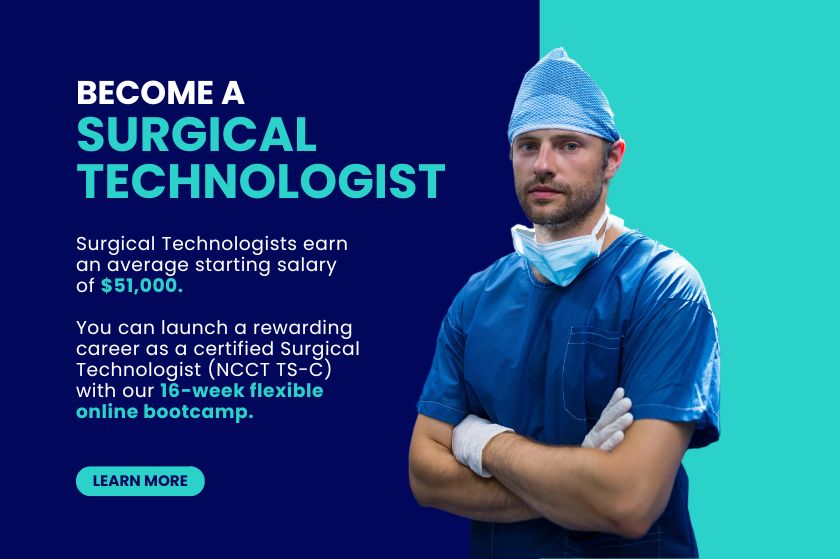
Start Your Surgical Tech Career
If you're still at the start of this path, Health Tech Academy's online Surgical Technologist program covers the coursework in 16 weeks and prepares you for the NRST, with one exam voucher and five 1-on-1 coaching sessions included. Start your path with the Surgical Technologist program or the Surgical Tech Professional program (NCCT TS-C), or take our free practice exam.
Frequently asked questions
What is the career path for a surgical tech?
Most surgical techs start in general surgery, then specialize (for example CVOR, labor and delivery, neuro or orthopedics), take travel or agency contracts, move into lead, educator or management roles, or train as a surgical first assistant. Some go on to become registered nurses.
How can a surgical technologist advance their career?
A surgical technologist can advance their career through continuous education, earning additional certifications, specializing in specific surgical fields, pursuing leadership roles, obtaining a bachelor's degree, and actively networking within professional associations. These steps help expand skills, increase earning potential, and open doors to advanced responsibilities.
How do I become a travel surgical tech?
Get certified, build operating room experience, and develop a broad case mix. Then join a staffing agency that places techs on short contracts, usually about 13 weeks, and check each state's surgical tech rules before you accept an assignment.
How much do travel surgical techs make?
Travel surgical techs earn about $2,522 a week on average, according to the staffing marketplace Vivian (October 2026). Pay depends on location, shift, specialty and housing support.
What is a CVOR surgical tech?
A CVOR surgical tech works in the cardiovascular operating room, scrubbing open-heart and vascular procedures such as coronary bypass and valve surgery. Most teams want general OR experience first.
Can a surgical tech become a surgical first assistant?
Yes. Surgical techs gain operating room experience, complete a surgical assisting program and earn a certification such as the CSFA, which requires graduating from a CAAHEP-accredited surgical first assistant program. Surgical assistants earned a median of $66,800 in May 2025 (BLS).
Is certification important for surgical technologist career growth?
Yes, certification plays a key role in career advancement. Earning credentials such as the Certified Surgical Technologist (CST) demonstrates professional commitment, improves job prospects, and can lead to higher-paying and specialized roles within surgical teams.
What surgical specialties offer advancement opportunities for surgical technologists?
Surgical technologists can advance by specializing in areas such as orthopedics, neurology, cardiovascular surgery, labor and delivery, minimally invasive surgery, or robotic-assisted procedures. Specialization allows technologists to develop in-demand expertise and become indispensable in complex surgical environments.
What skills help surgical technologists move into leadership roles?
Skills that support advancement into leadership roles include strong communication, problem-solving, critical thinking, adaptability to new technologies, and teamwork. These skills enable surgical technologists to mentor others, coordinate surgical teams, and contribute to improved patient care and operational efficiency.
Can a surgical tech become a nurse?
Yes. Many surgical techs go on to nursing school. Registered nurses earned a median of $97,550 in 2025 (BLS), and CST or TS-C holders who become RNs qualify for the CNOR certification after 18 months of perioperative nursing experience instead of 2 years.
Sources
- BLS Occupational Outlook Handbook: Surgical Assistants and Technologists(pay May 2025, advancement, RN median)
- Vivian: Travel surgical technician pay(national average, updated 13 Oct 2026)
- NBSTSA: CSFA Candidate Handbook
- Competency & Credentialing Institute: CNOR eligibility
- Texas Occupations Code §206.201