
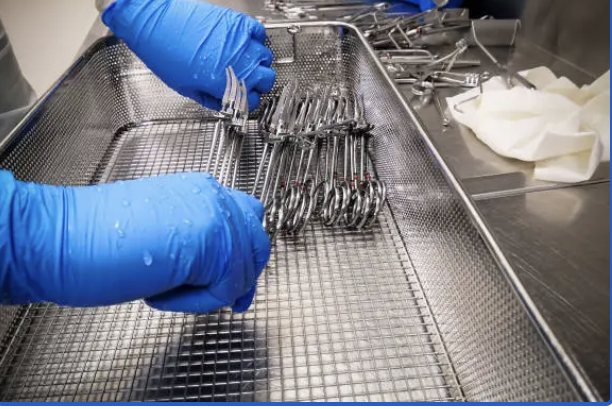
If you're considering sterile processing technician jobs in Florida, the job market is favorable. But ‘favorable’ doesn't mean effortless. Florida employers have specific expectations around credentials, OR readiness, and technical competency.
What Florida Sterile Processing Employers Are Expecting
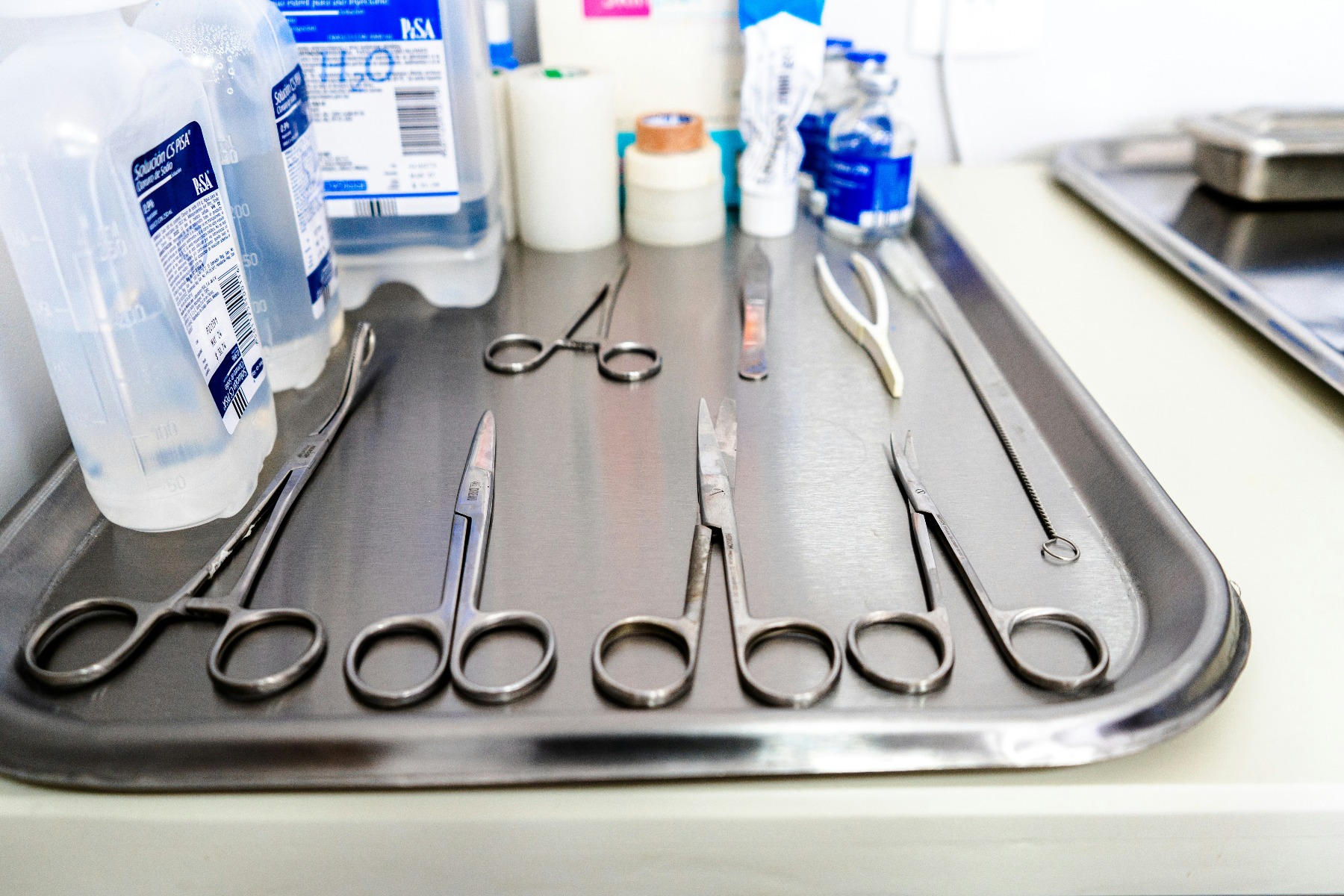
Certification is the Non-Negotiable Baseline
Florida does not require a state license to work in sterile processing. That might sound like a low bar, but it cuts both ways: without a licensing requirement, employers lean hard on national certifications as their primary filter.
The standard is the Certified Registered Central Service Technician (CRCST), awarded by the Healthcare Sterile Processing Association (HSPA). Across postings at Baptist Health, HCA Florida, AdventHealth, and Lee Health, the CRCST is either preferred or required. Baptist Health reduces its experience requirement from two years to one for candidates with a specialty certification – a direct acknowledgment that credentials carry weight.
The CRCST requires passing a comprehensive exam plus 400 hours of documented hands-on experience. Under the HSPA's provisional pathway, you can sit for the exam first, start working, and complete those clinical hours within six months of passing. That's the route most Florida candidates take when coming from a training program.
The Sterile Processing Technical Skills that Get Studied
Hiring managers are thinking about the OR schedule. The competencies that come up repeatedly in Florida job postings include:
- Decontamination and sterilization methods: Steam autoclave, hydrogen peroxide plasma (STERRAD), and ethylene oxide (EtO) each have specific load configurations, cycle parameters, and biological indicator requirements. Employers want technicians who understand why those parameters exist.
- Instrument inspection and assembly: Checking for bioburden, damaged tips, misaligned box locks, and missing components before a set goes to the OR is one of the most underrated skills in the department and one of the first things interviewers probe.
- Documentation and traceability: With increasing scrutiny from the Joint Commission and Centers for Medicare & Medicaid Services (CMS), SPDs maintain tighter instrument tracking records than ever. Familiarity with sterile processing software is a differentiator.
- Endoscope reprocessing: High-level disinfection of flexible endoscopes follows separate protocols from standard sterilization, and Florida facilities with gastroenterology and urology service lines treat this as a specialized hiring asset.
OR Readiness: The Buried Criterion
SPD technicians who understand surgical scheduling, can prioritize case carts intelligently, and grasp the downstream consequences of a missing instrument are the ones that OR charge nurses advocate for.
A study published in May 2026 by researchers at ChristianaCare found that 43% of SPD professionals reported pressure to bypass sterilization protocols due to operational demands.
"Sterile processing is at the root of perioperative safety, but it doesn't always have the visibility or authority in representing decision making."
– Brandon Gantt, Manager of Sterile Processing Quality, Education, and Training at ChristianaCare
Candidates who walk in already understanding that dynamic (and who can speak to holding the line under pressure) get hired.
How to Stand Out in Sterile Processing When You're Just Starting Out
Get Certified Before You Apply
A significant portion of applicants submit for Florida SPD roles without certification and without a structured plan to get it. Don't be that person. Even for entry-level positions listing certification as "preferred, not required," showing up with the CRCST – or an active enrollment in a program that prepares you for it – signals intentionality. You chose this career deliberately.
The Fastest Path to CRCST Certification
Health Tech Academy's 16-week online Sterile Processing Technician Certification Program is one of the fastest structured pathways available for independent learners. Fully online and self-paced, it prepares you specifically for the CRCST exam through the HSPA – with flexible scheduling that fits around your current life.
Start Here →No prior healthcare experience required. For career changers who can't spend a year in a traditional classroom, it closes the gap between where you are and where Florida's job market needs you to be.
Listen to One of Our Students
Target Strategic Sterile Processing Florida Markets
Not all Florida markets are equal. Miami-Dade, Broward, and Palm Beach counties have the densest hospital concentration – Baptist Health, Memorial Healthcare, and Cleveland Clinic Florida. Tampa Bay carries significant ambulatory surgical center (ASC) volume. Orlando is driven by Orlando Health and AdventHealth Celebration.
Smaller markets – Fort Myers (Lee Health), Gainesville (UF Health), and the Space Coast – tend to have less competition for open SPD positions and can be strong entry points for new technicians. Lee Health regularly posts multiple openings with pay ranging from $22.78 to $29.62 per hour, depending on shift.
Flexible candidates who can cover evening or overnight shifts also move through the hiring process faster. Night shift differentials in Florida typically add $2–$5 per hour above base, which adds up quickly on a 40-hour week.
Build Instrument Knowledge Before Your Interview
Instrument fluency is an underestimated differentiator. Before your first interview, learn the names, functions, and care requirements of common surgical sets:
- General surgery.
- Orthopedic.
- Laparoscopic.
- Cardiovascular.
HSPA's published resources, instrument manufacturer documentation, and surgical technologist content on YouTube are all freely accessible.
If you can explain the difference between a Kocher clamp and a Babcock forceps, or describe why tungsten carbide inserts require specific handling, you'll stand out from the majority of entry-level applicants who've never touched an instrument tray.
Come into Sterile Processing Interviews Thinking Like a Safety Partner
"Sterile processing is such a major partner in patient safety."
– Kevin Bush, Administrative Director of Perioperative Administration at ChristianaCare
The candidates who land offers are the ones who can articulate why protocol adherence matters, not just recite what protocols are. SPD managers are listening for judgment under pressure.
Sterile Processing Salary Benchmarks

Entry-level sterile processing technician jobs in Florida typically start at $18–$22 per hour. Certified technicians with two or more years of experience reach $25–$30. The 90th percentile earns upward of $60,000 annually.
Certification determines which tier of job posting you're eligible for in the first place. Major systems like Baptist Health have posted sign-on bonuses up to $5,000 for SPD roles, reflecting genuine staffing demand across the state.
Before the CRCST Exam: Test Yourself First

Knowing the material and performing on a timed certification exam are two different things. The CRCST pulls from a broad domain – microbiology, sterilization cycles, Occupational Safety and Health Administration (OSHA), Food and Drug Administration (FDA), and the Association for the Advancement of Medical Instrumentation (AAMI) standards – and it rewards retrieval practice over passive review.
Test Your CRCST Readiness
Take Health Tech Academy's free practice exam to benchmark where you stand before the real thing. It's a fast, honest diagnostic – use it early enough to shore up weak areas before exam day.
Take the Free Practice Exam →You’re Ready to Get Hired
Florida's SPD job market is structured, not casual. The hospitals here have preferences, the certification bodies have standards, and the ORs have zero tolerance for instrument failures. Earn the CRCST, understand what OR readiness means in practice, target the right markets for your experience level, and arrive at interviews able to explain why protocol adherence matters.
The field also has a retention and safety culture problem – and new hires who are protocol-minded, certified, and already thinking like safety partners are the solution to a problem hiring managers already know they have.
Frequently Asked Questions and Answers
Do I Need a License to Work as a Sterile Processing Technician in Florida?
No. Florida imposes no state licensing requirement for SPD technicians. Most employers substitute that bar with a strong preference for national certification, primarily the CRCST through the HSPA or credentials from the Certification Board for Sterile Processing and Distribution (CBSPD).
What is the CRCST and Why Does it Count in Florida?
The CRCST is the most widely recognized credential in sterile processing, issued by the HSPA. It validates competency across decontamination, sterilization, instrument inspection, and related functions. In Florida's unlicensed environment, it functions as the de facto professional standard – and many employers use it to reduce experience requirements or justify higher starting pay.
How Long Does it Take to Get Certified?
A qualifying training program – like Health Tech Academy's 16-week online format – prepares you to sit for the CRCST exam. Full certification requires 400 hours of hands-on experience, completable before or within six months of passing the exam under the HSPA's provisional pathway.
What Do Florida Hospitals Pay Sterile Processing Technicians?
Entry-level roles start at $18–$22 per hour. Certified technicians with experience earn $25–$30. Evening and night shift differentials add $2–$5 per hour above base. Top earners in the 90th percentile exceed $60,000 annually.
Can I Get a Florida SPD Job Without Prior Healthcare Experience?
Yes. Many facilities will hire candidates without healthcare backgrounds if they hold a CRCST or are enrolled in a qualifying program. Smaller Florida markets and overnight shifts are often the most accessible entry points for first-time candidates.
What Skills Beyond Certification Do Florida Employers Screen For?
Interviewers consistently probe for: knowledge of surgical instrument sets by name and function, familiarity with sterilization documentation systems, endoscope reprocessing experience, OR scheduling awareness, and the ability to maintain protocol adherence under operational pressure.