
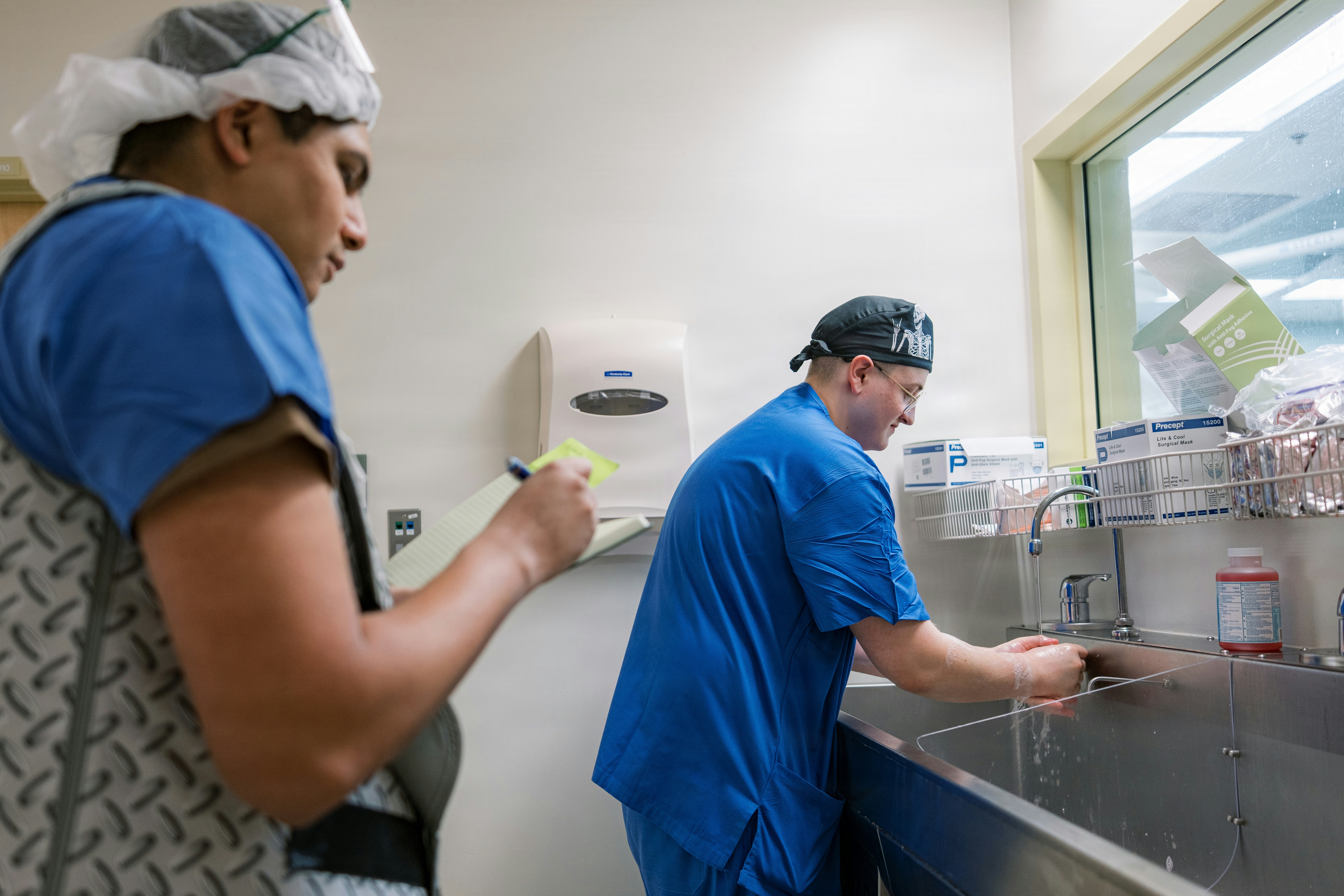
Why Sterile Processing Demand Holds When Spending Does Not
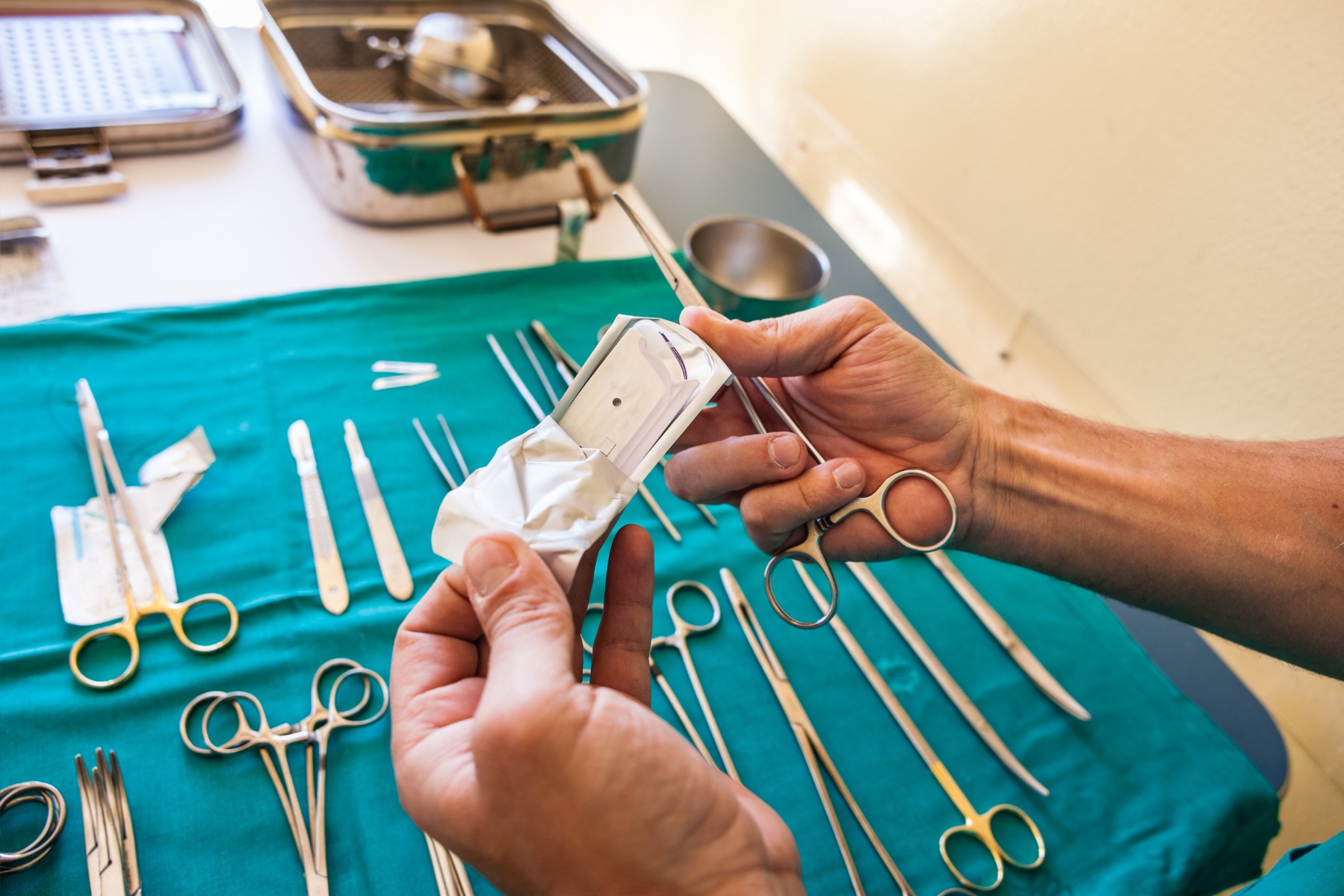
Healthcare shed jobs during the 2008 downturn at a rate close to zero while the wider economy lost roughly 8.7 million. The sector added positions through the contraction. That pattern repeats because the demand underneath it is clinical rather than discretionary.
Three mechanics keep sterile processing steady:
- Emergency and urgent surgery does not pause. Appendectomies, trauma, fractures, and cardiac cases continue regardless of consumer confidence. Every one of those cases generates a full tray of instruments requiring decontamination, inspection, assembly, and sterilization before the next patient.
- Regulation sets the floor, not the budget. Central sterile departments operate under standards from The Joint Commission, the Association for the Advancement of Medical Instrumentation, and state health departments. A facility cannot reduce reprocessing volume to save money the way it might delay a finance hire.
- Demographics run in the opposite direction to the business cycle. The population aged 65 and over keeps growing, and that group consumes surgical care at several times the rate of younger cohorts.
How the Recession Exposure Compares

| Factor | Sterile processing | Roles more exposed to downturns |
|---|---|---|
| Demand driver | Surgical case volume, clinically determined | Consumer or corporate discretionary spending |
| Regulatory floor | Mandated standards set minimum staffing | No equivalent compliance requirement |
| Elective dependence | Partial. Emergency and urgent volume continues | Often total |
| Automation exposure | Low. Inspection and assembly remain manual judgement | Higher for routine administrative work |
| Entry timeline | 16 weeks to a recognized credential | Frequently two to four years |
| Backfill difficulty | High. Certified staff are scarce | Lower |
The vulnerability worth naming honestly: Elective procedures do soften in a downturn, and departments weighted toward outpatient orthopaedic or cosmetic work feel it. Hospital-based central sterile roles absorb far less of that shock than an ambulatory surgery centre does.
Sixteen Weeks is the Whole Entry Cost
Health Tech Academy's online Sterile Processing Program prepares you for the Certified Registered Central Service Technician (CRCST) credential through the Healthcare Sterile Processing Association (HSPA), which is the qualification most employers now treat as the hiring floor.
Hear From One of Our Students
What the Bureau of Labor Statistics Projections Mean

The Bureau of Labor Statistics (BLS) does not publish a standalone category for Sterile Processing Technicians. The work sits inside broader medical equipment preparer and healthcare support classifications, so a single tidy growth figure does not exist. What the data does show is that healthcare support occupations are projected to add jobs substantially faster than the average across all occupations through 2034, driven by the same ageing population that drives surgical volume.
The number that carries more weight for job security is turnover. The 2026 Nursing Solutions Inc (NSI) National Health Care Retention Report, covering 527 hospitals and 965,886 workers, found hospital turnover running at 18.4%, with 29.5% of new hires exiting inside twelve months. Every departure is a vacancy someone has to fill, and certified sterile processing staff are not sitting in a queue waiting.
"Sterile processing is a critical function in patient safety and infection prevention."
– Josephine Colacci, JD, Advocacy Director at Healthcare Sterile Processing Association
Her framing explains the leverage. Departments that cut here do not save money – they create infection risk, cancelled cases, and regulatory exposure. That is a poor trade in any economy.
Secure Your Sterile Processing Job with Certification
The honest answer to the headline question is no, and the useful answer is that sterile processing sits closer to the resistant end of the spectrum than almost any allied health role with a sixteen-week entry path. Its security comes from three things stacking:
- Clinical demand that ignores the business cycle.
- Regulatory standards that set a staffing floor.
- A certified workforce small enough that replacing you is difficult.
That third factor is the one you control. Uncertified technicians are the first to feel a hiring freeze. Certified ones are the reason the freeze does not touch the department.
Frequently Asked Questions and Answers
Do Sterile Processing Technicians Get Laid Off During Recessions?
Rarely, though not never. Facilities heavily weighted toward elective outpatient procedures carry more exposure than hospital central sterile departments, where emergency and urgent surgical volume continues regardless of economic conditions.
Is Sterile Processing at Risk From Automation?
Washers and sterilizers are already automated. Instrument inspection, tray assembly, and count verification require human judgement and remain manual, which is where most of the role sits.
Does Certification Improve Job Security?
Substantially. Many employers now require CRCST certification or completion within a set window after hire, which makes uncertified staff the more replaceable group during any hiring slowdown.
Which Settings Offer the Steadiest Work?
Hospital central sterile departments and trauma centres see the least volume variation, since their caseload is driven by emergency and inpatient surgery rather than scheduled elective procedures.